



Hello!
You’re visiting Tikkurila website from United Kingdom. Would you like to visit the local UK site?

It’s time to choose a paint that truly lasts. With Tikkurila’s exterior wood paint
selection, your home gets a combination of protection and beauty for decades
– even generations.
Time can be fleeting. While it’s fascinating to see how life evolves over the years, sometimes it would be nice to just keep things as they are. Tikkurila’s exterior wood paints help you do exactly that. These paints are designed to give lasting beauty to your home through every season, calendar year, and wind of change.
Painting wooden houses is a great way to improve the look and feel of your home. Not only does it make your house look better, but it also benefits wooden house in several other ways.
First and foremost, painting wooden houses can help protect them from weather damage. The paint acts as a barrier between the wood and the elements, keeping moisture out and preventing rotting over time. This can help extend the life of your home by many years and save you money in repairs down the line.
Painting wooden houses also increases their value when it comes time to sell them on the market. Homes with fresh coats of paint tend to draw more attention from potential buyers due to their improved appearance compared to homes without maintenance painting. If you’re looking to increase the value of your home before selling, then investing in a good quality painting project is definitely worth considering.
Finally, painting wooden houses is an easy way to add colour or personality into any space without having to completely remodel. You can choose colours that match existing décor or opt for bolder shades if you want something new and different; either way, painting wooden faced is a great way to give your house an instant facelift!
Overall, there are many benefits associated with painting wooden houses that make it well worth considering if you’re looking for ways to improve your home’s appearance or simply keep it in good condition over the time.

1. Choose a shade that suits the environment of the house
Design your house as part of the environment. Is the building located in a dense urban area, in the countryside, in a field, in the middle of a forest or by a lake?
In urban areas, the use of colours has been limited to create a uniform look. If you plan to change the colours radically, contact the local planning authority. Otherwise, observe your surroundings, draw ideas from nature and ready-made colour combinations.
The colours look different up close and far away. Dark surfaces blend into nature better when viewed from a distance, while light ones stand out clearly. In open and bright places, buildings can be lighter in tone, while at the edge of a dark forest, a darker tone usually looks better.
The time of day, the weather and the changing of the environment according to the seasons affect the perception of colour. Autumn's brown, winter's snow, spring's greenery and summer's rich hues all create a different frame for the shade you choose.
2. Choose a more subdued and darker house colour than you thought
Colours often look lighter and brighter on a large surface surrounded by the strong colours of nature than in a small colour sample of the colour chart on a white background. Choose a more subdued and darker colour from the colour chart than you thought - this way you are usually closer to the desired result.
3. Translucent or opaque house colour?
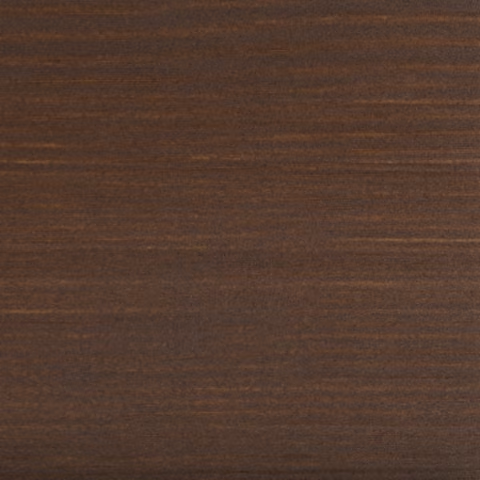
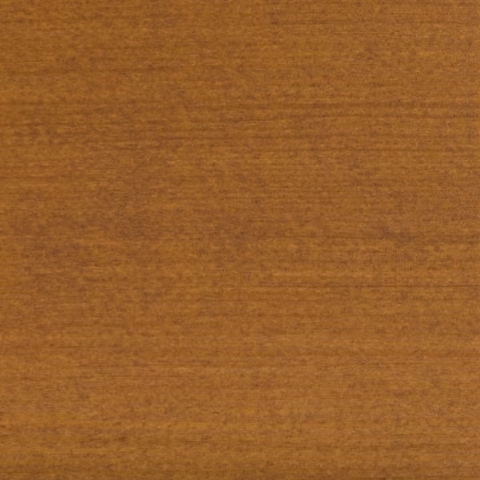
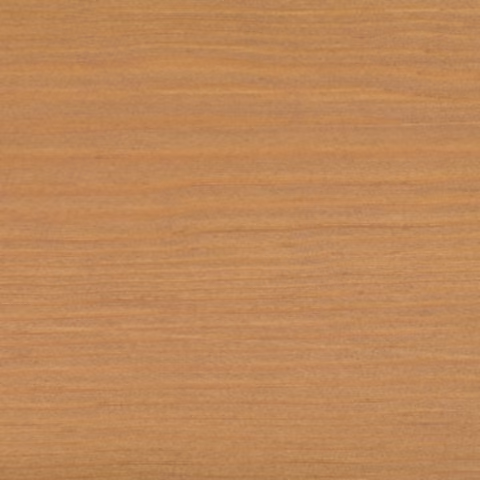
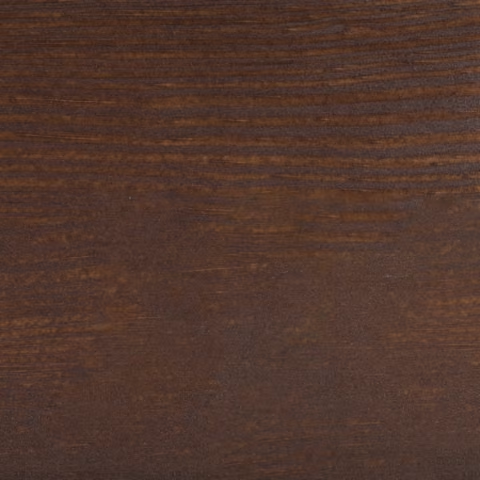
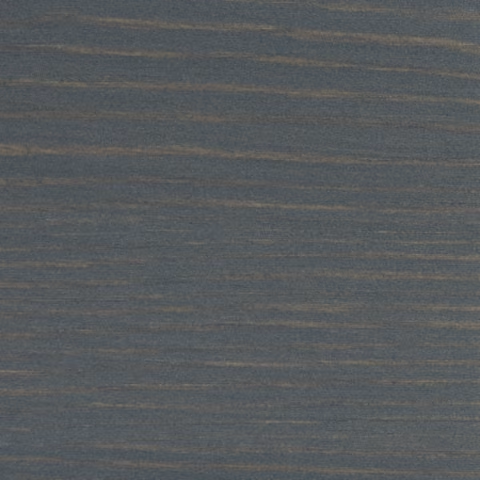
If you’re repainting an old house painted with an opaque finish, you’ll need to go with an opaque this time also. This is the case also with a new house if the facade is factory primed. But, if you have a clean wooden facade, a translucent finish with an organic feel might be a good option. Try different shades on your facade to find the perfect tone – the shade is always affected by the colour of the wood underneath.
4. Choosing the accent colour
Sometimes more than one colour is just what your house needs. An accent colour in the right place, such as planking details or the walls of a recessed terrace, makes the house facade one of a kind, and brings some symmetry and rhythm to the look.
When choosing the accent colour, it’s beneficial to consider if you want the house to blend in with the environment or if you’d rather have it stand out. Dark colours tend to merge with the surroundings, whereas light colours shine bright.
If you’re looking for contrast, pair complementary colours or dark tones with light shades. On the contrary, when looking for balance and harmony, pair matching, kindred colours.
The most important thing is to check the restrictions with your local planning authority. Also, always remember to test the colours together in the right surroundings. Use test plates and see how they look at different times of the day.
5. View the colour samples under the right conditions
View the colour samples in natural light outdoors and vertically. Outdoors, the colour scheme often looks lighter and bluer than indoors. Against the white background of the colour card, the colour intended for the outside looks significantly darker than in its real environment.
The time of year and day also affect the perception of colour, so in the dusk of the evening and the bright light of the morning, the facade looks completely different.
6. Make a test painting
Make sure of the right shade by painting a square test area. The choice of colour can be made easier by making a test painting on a separate plate or wooden block and looking at the colour in the right lighting and environment. When using translucent products, remember that the colour is also affected by the tone and quality of the underlying wood material.

You’re visiting Tikkurila website from United Kingdom. Would you like to visit the local UK site?